Tesla Maps Out New Path After Years of Dismissing the Need for Them
The automaker is developing proprietary mapping to address persistent issues within its Full Self-Driving system.
By Natalia Campos ·
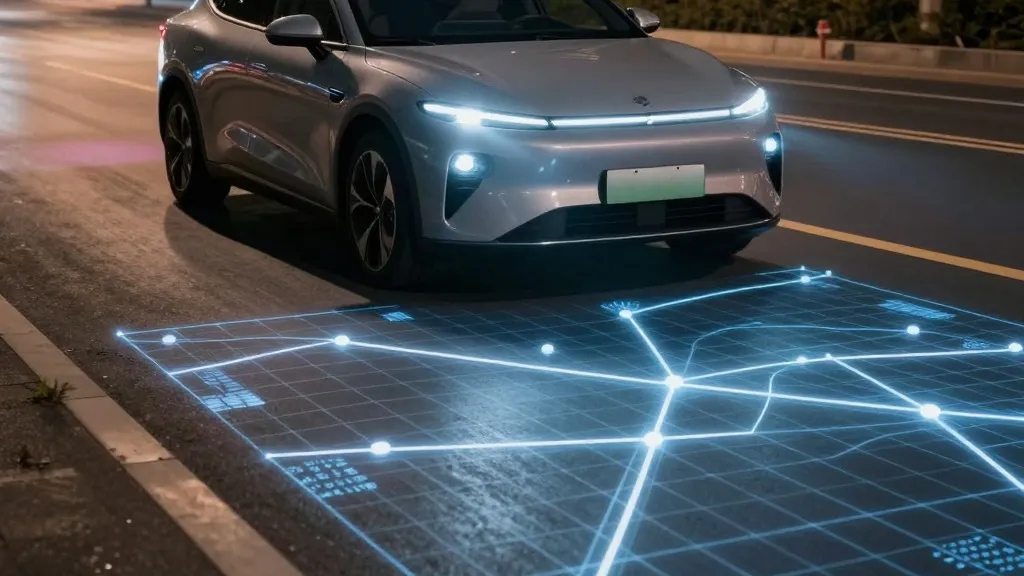
Tesla is now constructing its own map data to improve its 'Full Self-Driving' capabilities, a move the company's head of artificial intelligence described during the Q3 2026 earnings call. The stated goal is to resolve specific failures the system currently exhibits, including incorrect speed limit readings, parking assistance, and route selection. This development marks a significant pivot for the automaker, which has long argued that relying on external mapping data creates a brittle autonomous driving system.
The request originated from a shareholder during the earnings call's Q&A session. The investor noted that mapping issues, specifically regarding speed limits and parking, 'continues to be a problem.' In response, Ashok Elluswamy, Tesla's VP of AI, conceded that the company 'shouldn’t be depending on external people’s maps.' He outlined a plan to generate this data using a new AI-based architecture fueled by the collective learning of the vehicle fleet, which will also incorporate individual driver preferences.
The timeline for this transition begins with the release of FSD v15, which will handle trip beginnings and ends. Over the subsequent months, the system intends to take over navigation, parking, and destination handling. This current strategy stands in direct contrast to the company's public stance on autonomous driving technology from 2019, when Elon Musk described high-precision maps as 'a huge mistake' and a 'really bad idea' that would render a self-driving system 'extremely brittle.'
Prior to that, in 2015, Tesla had informed Fortune that it was building high-precision maps with '100 times the level of granularity' of standard navigation systems. The company’s current pivot involves creating a map layer intended to address failures in environmental understanding, particularly regarding speed limits. Recent data highlights this gap: a Belgian road safety group found that FSD vehicles exceeded speed limits in 55% of tested 30 km/h zones in Brussels, and the National Highway Traffic Safety Administration is weighing an investigation into claims that Tesla Robotaxis speed through active school zones.
By utilizing its customer fleet to collect data for mapping purposes, Tesla is adopting a methodology similar to that of Waymo. Waymo maps cities using sensor-equipped vehicles prior to launching service and maintains those maps continuously. While Tesla has historically criticized this reliance on mapping and LiDAR technology, the company is now describing a system where its cars collectively map the environment to improve navigation for every other vehicle on the road.
Tesla is not currently pursuing centimeter-level HD maps, but the company’s Robotaxi service does operate city by city within small, geofenced areas. The company has pushed the timeline for unsupervised FSD in customer vehicles to the second quarter of 2027, limiting initial availability to the Robotaxi fleet. As Tesla prepares to roll out this expanded mapping capability, it is engaging in a process it previously dismissed as incompatible with a 'true self-driving system.'
Source: Electrek